
A colleague in Edinburgh asked me about confidentiality, and I lied
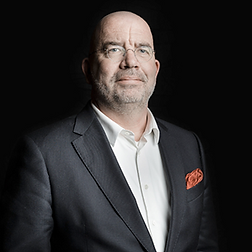
Working with the Machine: A Practitioner’s Log | 2 of 12

Second instalment: what I had actually arranged for my clients' material by the spring of 2025, and what it took to put that right.
It was in Edinburgh, in the spring of 2025, that somebody finally asked me the question.
A colleague fell into step beside me on a walk and wanted to know, rather carefully, what I was doing with AI. I told him: the drafting, the planning, the step plans, the way it would take a register on request. He listened with the attention of a man who has been wondering about something for a while and has not said so to anyone.
Then he asked what happened to the client material I put into it.
I said I worked in a private environment, closed off, nothing shared. He nodded, and we moved on to something else.
That was a lie, and I knew it while I was saying it. What I could not do was tell him the truth, which was that I had no idea.
What I actually had
A paid subscription, and nothing else. I had never read the terms, and had no real idea what was done with what I typed beyond a general sense that the whole thing had been built out of other people's text and that mine was presumably no different.
I would like to be able to say I was caught off guard. I was not. The honest answer, there on a path in Edinburgh, was that a Dutch chartered accountant (registeraccountant) had been dropping fragments of client material, unprepared, into a system whose terms he had never opened. That is not a thing one says out loud on a walk. So I gave him the answer a man in my position ought to have been able to give, and hoped it would turn out to be true.
The ritual that did not scale
In fairness to myself, I had started out doing it the hard way. Before anything went in, I took it apart: names replaced, figures altered, places removed, and the result read through once more to be sure. For a single document that is perfectly workable. It costs an evening and you sleep well afterwards. But I was not using it for a single document. I was using it every day, and within a few months the preparation was taking longer than the work it was preparing.
So it slipped, the way these things slip in any practice: one exception at a time, each of them perfectly reasonable. The substantial documents I went on preparing properly, and by the spring of 2025 I still was. What I stopped preparing were the quick questions: the half-sentence pasted in to check a formulation, the figure I wanted a second opinion on, the paragraph dropped in to see whether it read better the other way round. Each too small to be worth an evening of anonymising, and many of them a week.
By the time I walked through Edinburgh I had a careful procedure for the material that looked important, and no procedure at all for the material that went in most often. The sensible conclusion would have been to stop until I had put that right. I did not want to stop, and I did not.
Eighteen months earlier
It is worth going back, because in 2023 I had been the one giving the answers.
On 2 October 2023 I spent an afternoon at a firm of tax advisers, introducing them to the thing. I still have the deck. Six items on the agenda, almost all of them about writing: a text rewritten plainly and then formally, the same paragraph in one generation's voice and then another's, translation into English and then into Japanese, which nobody present could check and everybody found impressive. The last item was email correspondence, meaning the letters one actually sends to clients.
Six items, and not one of them concerned where the text went after you typed it in. Nobody asked, and neither did I.
One of the lines I used then was that I would take artificial intelligence over human stupidity any day. It is a reversal of the old saying that artificial intelligence is no match for natural stupidity, and in a room of sceptics it did its work.
In Edinburgh, eighteen months later, the stupidity was mine.
What I checked, and what I could not
It took a colleague on a walk to make me do what, as a partner, I would have demanded of any new supplier on the first day.
I read the terms, first for ChatGPT and then for Claude, to which I moved not long afterwards. Confidentiality was why I started looking. Why I stayed belongs in a later instalment.
It took one evening. There is a setting that governs whether your conversations may be used to train future models, and there are published retention periods that follow from it, running from thirty days for a deleted conversation to five years in the training pipelines, and longer for the safety scores on a conversation the automated systems have flagged. As to where the data sit, the published answer is that they may be processed in the various countries where the company and its partners operate, with transfers out of the European Economic Area resting on adequacy decisions and standard contractual clauses.
None of it is hidden. It sits on a public website in plain English, which is the most effective hiding place there is, since nobody looks there. Once I had read it there was one switch to turn off, which took less time than writing this sentence about it.
What I cannot do is verify from my desk in IJmuiden that what the terms say is what happens. What I have is a published undertaking and a supplier with a reputation to lose. It is the same basis on which I rely on my bank and on the firm that hosts my email, about neither of whom anyone has ever asked me either.
Where it stands now
My engagement letter has a clause about it now, under the heading on the use of technology and artificial intelligence. It says that these tools support the work under my own supervision, that they do not replace professional judgement, that client data remain confidential, and that they are not used to train third parties' models.
Until this month it said one thing more: that the data are processed within the European Economic Area. In preparing this article I checked that sentence, which I had written in good faith some time ago, and could not support it. What is published says the data may be processed in a number of countries. That may well be lawful. It is not what my letter said.
Nor is the rest of the clause on firmer ground than it looks. On a consumer subscription, the undertaking that my material will not be used to train anyone's models rests on a setting I can switch off. A setting is not a contract. On the commercial terms the supplier acts as processor on my instructions, and the processing agreement comes with them; until I was on those terms I was describing a preference as though it were an agreement. I moved to them on the afternoon I finished this instalment, which tells you how long it had been outstanding and how little time it took. I am rewriting the clause to say what it can now honestly say.
That is the second time in this account that I have asserted something I could not support. The first I merely said out loud. The second I had signed, and sent to clients.
One practical note, for those who would rather not spend the evening. I found every fact in this instalment by asking the machine itself, which is rather like asking the salesman to read you the small print: he will do it quickly and cheerfully, and you would be wise to read it again yourself. I did, and that is where I found that something I had been on the point of writing was true of the business subscription and not of mine. That evening's reading was open to me in 2023, and in Edinburgh, and I did not do it then.
No client has ever asked me the question. Not one, in three years. The only person who ever put it to me was a colleague on a walk in Edinburgh, and he deserved a better answer than he got.
The setting, the retention periods and the clause as it now reads are set out at greater length than there is room for here. Members who would like that note, or who would rather compare it against their own arrangements before deciding what to change, are welcome to write to me.
Sources, all from the supplier's published privacy material: How long do you store my data?, How do I change my model improvement privacy settings?, How does Anthropic protect the personal data of Claude users? and Does Anthropic act as a data processor or controller?. Checked 26 October 2026. Readers on other plans should check their own.

Comments